
Connect Detection Content Across Your Security Stack
Use SIEM Rules outputs and APIs to move detection content into other security systems and workflows.
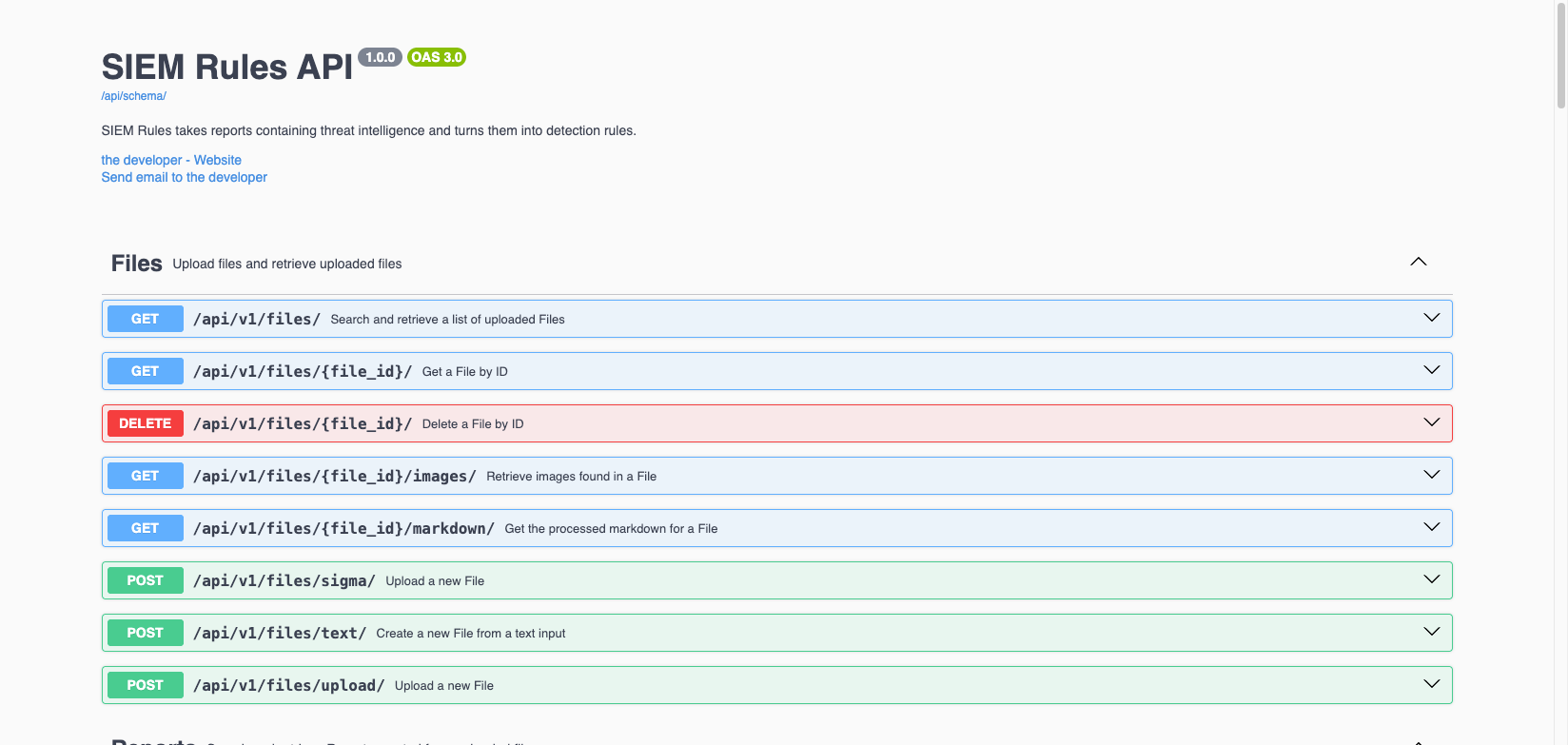
Overview
Detection content is most useful when it does not stay locked inside one interface. Security teams often need to push rules and related objects into downstream tools, data pipelines, and collaborative workflows.
SIEM Rules supports that interoperability with API and export surfaces that help teams connect generated content to the rest of their security stack.
Who This Is For
This solution is most relevant for platform-oriented security teams, developers supporting security workflows, MSSPs, and organizations that want detection content to move cleanly between products and internal systems.
Why Teams Use It
- Move generated content into downstream platforms
- Reuse rule data in engineering and operational workflows
- Standardise how detection outputs are shared across teams and tools
Integration Mindset
The point of SIEM Rules is not to be the final destination for every rule workflow. It is to help create and manage detection content in a form that can be consumed elsewhere. That includes downstream SIEM and XDR workflows, internal tooling, standards-based sharing, and machine-readable export paths.
What That Enables
When teams can move generated content easily, detection engineering becomes less fragmented. Intelligence processing, rule generation, sharing, export, and downstream operational use can all sit inside a more connected content lifecycle.
What Outcome It Supports
The outcome is a more connected detection workflow. Rule generation, enrichment, review, and downstream consumption become part of the same operating model.