
Developer and Security Automation Workflows
Integrate SIEM Rules into engineering pipelines, internal tools, and automation-led detection workflows.
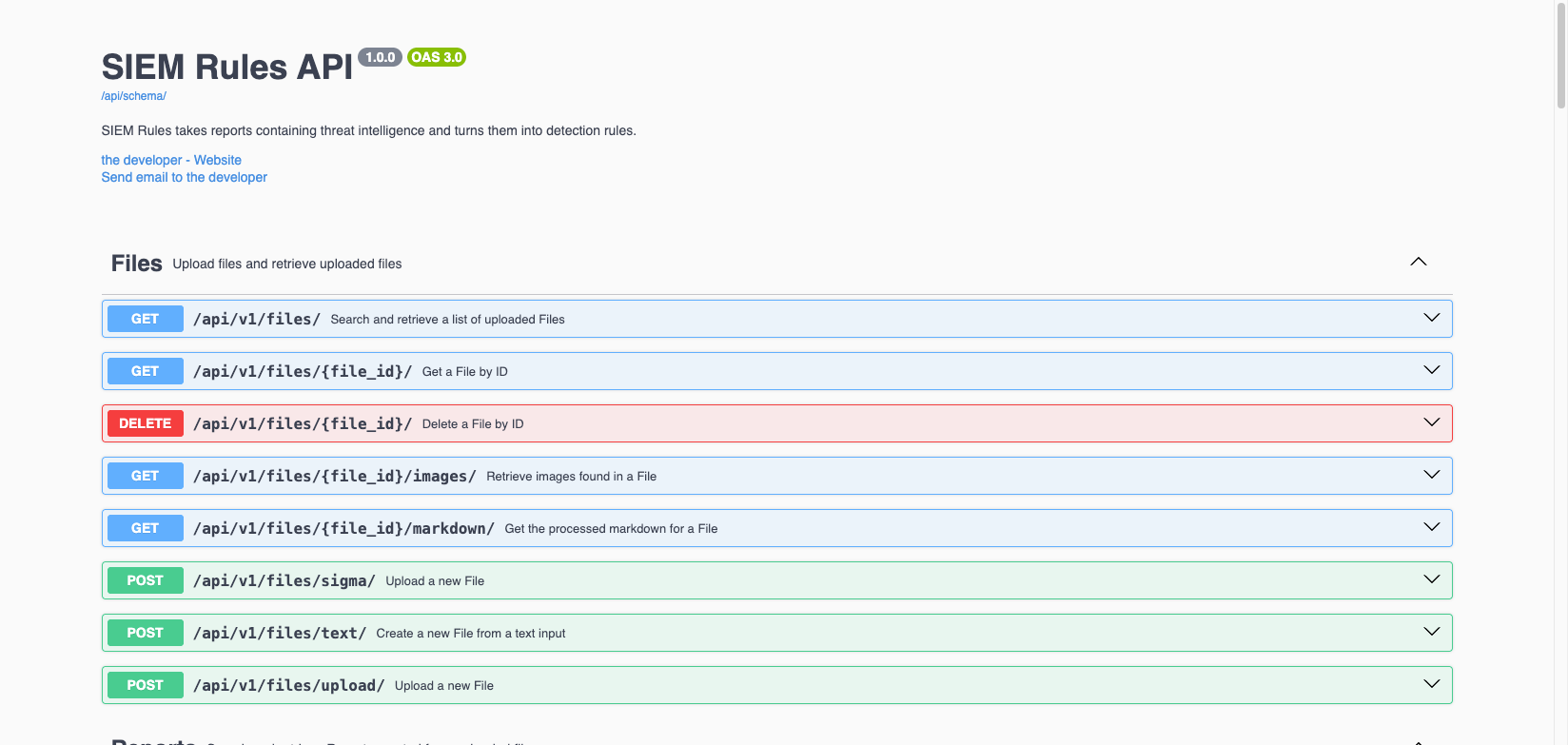
Overview
Some teams want more than a browser-based workflow. They want to query rule data programmatically, move outputs into internal systems, and make SIEM Rules part of a broader automation stack.
This use case is about those engineering-led workflows. SIEM Rules can sit inside internal processes where developers, platform engineers, and security automation teams need a machine-readable way to work with detection content.
Who Uses This Workflow
This workflow is designed for technical teams building internal platforms, security automation, detection-content pipelines, or AI-assisted processes that need to interact with SIEM Rules as a system, not only as a webpage.
Why Teams Use It
- Integrate rule workflows into internal tools
- Use SIEM Rules outputs inside repeatable automation
- Support AI-assisted and developer-led detection engineering processes
Typical Examples
Examples include internal services that fetch or process detection content, pipelines that export SIEM Rules outputs into other systems, and automation that wraps intelligence ingestion together with rule generation and downstream review.
Why This Workflow Matters
It helps technical teams standardise how SIEM Rules is consumed. Instead of using the product only through manual analyst interaction, they can make it part of repeatable engineering processes that scale more cleanly.