
What Is SIEM Rules?
Learn what SIEM Rules is, who it is for, what it produces, and how it fits into a threat-intelligence-driven detection engineering workflow.
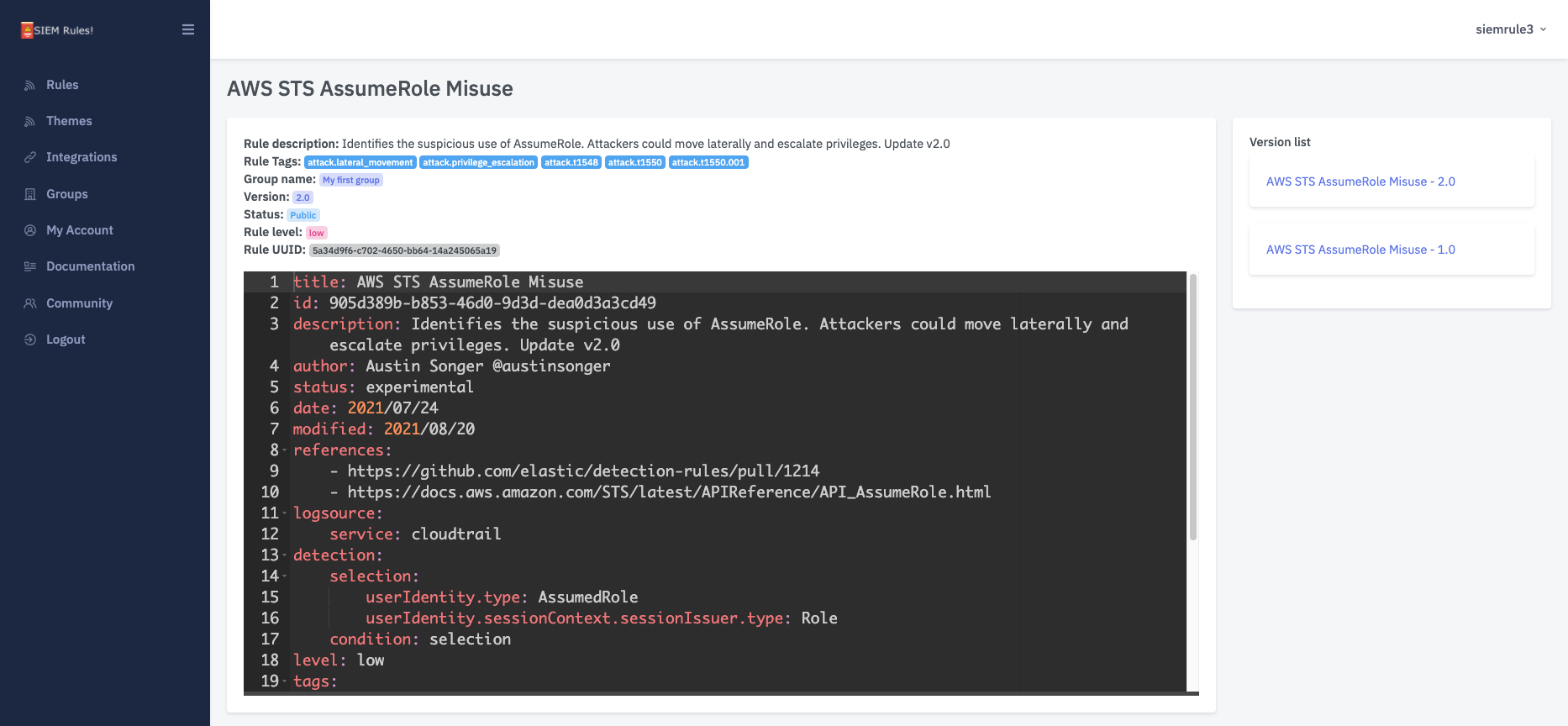
Overview
SIEM Rules is a detection engineering product that turns cyber threat intelligence into detection rules and related outputs teams can use in downstream security tools.
It is designed for detection engineers, threat hunters, SOC teams, security researchers, and developers who want to move faster from a report, hypothesis, or threat lead to usable detection content.
What Problem It Solves
Writing and maintaining detection content from threat intelligence is usually slow and manual. Teams need to read reports, identify attacker behavior, decide what telemetry matters, write platform-specific rules, and then keep those rules current as new intelligence appears.
SIEM Rules reduces that manual translation work. It helps teams operationalise intelligence as detection content instead of leaving it trapped in reports, notes, or one-off analyst workflows.
What You Can Do With It
- Upload threat reports and other intelligence sources to generate detection rules
- Review, tune, and manage rules for hunting and detection workflows
- Share rules internally and publish selected content more broadly with TLP-aware workflows
- Export outputs such as STIX bundles and ATT&CK Navigator layers
- Access content through REST API and TAXII API workflows for integration and automation
How It Works
At a high level, SIEM Rules accepts intelligence input, converts it into text that can be processed, uses detection-focused AI workflows to create detection content, stores the resulting objects and metadata, and exposes them through the application and API surfaces.
The open-source SIEM Rules codebase is the core API layer. The hosted SIEM Rules web product builds on that core and adds the wider application experience, managed workflows, and commercial features described on this site.
What SIEM Rules Produces
SIEM Rules produces detection content and supporting outputs. Depending on the workflow, that can include rules for SIEM and XDR use, STIX objects and bundles, ATT&CK Navigator layers, and API-accessible rule data.
That distinction matters for positioning. SIEM Rules is not a SIEM. It is a product that creates, manages, and exposes detection content that can be used in SIEMs, XDRs, and related downstream systems.
Standards, Outputs, and Integrations
- REST API workflows
- TAXII API workflows
- STIX bundle export
- ATT&CK Navigator layer export
- Detection content for broader SIEM and XDR workflows
These outputs matter because they make SIEM Rules useful beyond a single interface. Teams can feed the content into their wider detection engineering, threat hunting, and automation workflows.